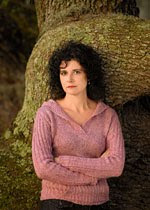
For those who are just joining us here at "It's Like Making Sausage," I am the author of a series of mysteries that feature an archaeologist who works in the southeastern United States. Because of the nature of archaeology, it only makes sense that I weave the history of my books' settings into the plot. Because of who I am--a chemical engineer with another degree in physics, who has worked as an environmental consultant--I feel compelled to make sure my fictional world operates properly. My stories are intended to be entertainments, so the history and science are buried deep beneath the surface. I do not believe you will ever pick one up and say, "This reads like a textbook! Yuck!"
On the contrary, the books get great reviews that use words like "fascinating" and compelling," and they've won awards for being fun to read. But they also get good reviews from archaeologists and recognitions like an award from the Florida Historical Society. When I start researching a new story, I'm serious about getting things right, so I go to the source.
When I wrote my fifth book, Floodgates
 , I sold it to my editor by pointing out that I was the author to write a book about post-Katrina New Orleans that would be different from any other, because I have family there and a personal history there that includes a summer working offshore in the Gulf. I also pointed out that, as a licensed engineer, I just might have something worthwhile to say about the levee failures. She saw my point and let me write the book. I made much the same argument in favor of my writing a book that features the oil spill catastrophe and, again, she let me write the book. (I love her for being willing to listen to me.)
I figured that something as unprecedented as millions of gallons of oil stretching over a goodly chunk of real estate was something I needed to see with my own eyes, so I got in my car and drove east until I got to New Orleans.
As I drove across on I-10 on Friday, June 5, the only certain indication of the disaster was periodic announcements on the Panhandle radio stations that scattered tar balls had washed up on the beaches, but that they were otherwise fine and open for business. As we all know, by the end of the day, those tar balls had proliferated and morphed into the splattering of oil globs that has now affected 150 miles of what were the prettiest beaches I've ever seen.
There was an odd moment when I got an unmistakable whiff of raw oil. I still don't know how this could be. I was miles inland from the gulf. I spent the weekend way down in the Mississippi delta, which is soaked with the stuff just a few miles way from where I was, yet I only detected such a strong scent of oil once. And when I did, there was no oil in sight.
I don't think I imagined the odor. I'm wondering whether the oil is already so weathered when it reaches shore that the volatiles have all entered the air. And maybe stray sea breezes bring it ashore at unexpected times and places. This may explain the numerous reports of petroleum odors near my home in north central Florida, which is far, far from the catastrophe at the moment. Who knows? I'm sure BP doesn't.
Another subtlety I noticed during my drive were two trucks loaded with pipe that was maybe 3 feet in diameter and 20 feet in length. It wasn't a particularly noteworthy sight, except for the police escort, before and after the trucks. There was no wide load sign, and the loads weren't wide. These escorts weren't the traffic technicians that usually accompany wide loads. They were marked cars with blue lights flashing. Coming home, I saw the exact same thing.
I think the pipe was destined for the relief wells, and it was a visual reminder of the enormity of that task. If it takes two trucks and two law enforcement vehicles to transport about 120 feet of pipe, what level of effort will it take merely to get the equipment for those very important wells to the site, much less to drill two such tremendously deep wells? This may be part of the reason we're being told that it will be August before the wells will be finished. Who knows? Maybe they're having to make the pipe before they can finish the wells. It seems to me that someone should have thought of the logistics of this Herculean effort before they ever began drilling at that depth in the first place.
As I neared New Orleans, I drove over swamps and industrial canals and neighborhoods that shouldn't be still trashed from Katrina, but they are. I whizzed past high-rises and the Superdome, and my car climbed high, high above the Mississippi River. Then I hung a left and stopped in Algiers to pick up my cousin Cheryl.
Cheryl grew up on the West Bank and still lives there. She spent several years living in Plaquemines Parish. She'd told me that she thought she could find a friend with a fishing camp we could borrow for the weekend. She could think of three off the top of her head, but she hoped she could get us access to her boss's camp because it "was nice."
I was expecting something like this:

(Notice how the gorgeous water and sky makes plumbing-free shacks built with scraps of plywood and random pieces of roofing look fairly beautiful.)
Here's the actual camp:

It has four bedrooms, granite countertops, stainless steel professional appliances, and it is beautifully decorated. I looked and looked for something in that "fishing camp" that wasn't nicer than anything I owned. Nope. I was hoping for a relaxing getaway, but I really didn't expect luxury. Score!
The owner, Kenny, came down while we were there and took us out in his friend's boat, so we scored again, since my main goal was to get a look at the countryside and the oil spill. But I'll get to that later. On that first evening two exhausted single moms sat on the porch of that magnificent "camp", looking out over the water while we soaked in the jacuzzi, drank beer, and digested a big platter of crawfish. It was truly hard to imagine the devastation that is surely coming to that very spot.
Tomorrow, I'll tell you about a national monument, scads of helicopters, an oiled pelican, and a whole bunch of sandbags. Pray with me that BP gets the oil well capped soon, so that the hardworking relief workers I saw can know that they are making progress, rather than just continuing with the Sisyphean task of mopping up oil while more spews into the Gulf to take its place.
Until then--
Mary Anna


 and
and  . In those cases, I just make a trip to the real places located nearest my imaginary locales.)

 , my agent said casually, "Why don't you write some synopses for the next few books in the series? Maybe five or six. In case I need to wave them in front of an editor or movie scout sometime. And while you're at it, send me some titles you might use later in the series."