I promised yesterday that I'd talk more about Joe. Some of you are very happy. (You know who you are.) Most of you are women, but not all. Joe's a man's man, and my male fans like him, too. Or, as I like to say, women want to marry Joe. Men want to be Joe.
Joe travels a tremendous story arc in the books, because he has so much to do and learn and be when we first meet him in Artifacts. He is only 25, after all. He shows up on Faye's island, homeless, with nothing to his name but a ratty johnboat and some camping gear and his clothes. A lack of money or possessions isn't really a problem for Joe, as long as he has a place to lay his head. He's got the equivalent of a Ph.D. in ancient weapons, just because flintknapping settles his mind. When he left home, he went out searching for someone to teach him how to do flintknap well, and he truly does. Joe can tell the weather by the stirrings of the animals in the bushes. He can catch fish when they're not biting. When Joe plants cucumbers, you'd better to be ready to make a bunch of pickles. Once he's settled on Faye's property, he pays her very well in food he's shot or caught or grown.
His parents weren't really into their Creek heritage, so they didn't teach it to Joe. They loved him dearly and taught him to fish and hunt, but they mistook learning disabilities the size of boulders for mental slowness, so they didn't teach him much else. He has a mystical soul, so he sought out people who could teach him the old ways, and he's cobbled together his own approach to the spiritual side of life that works for him. When Faye is rumpled in her mind because she can't force the world to spin as she wishes, Joe knows how to explain things to her. He knows that the world will spin and the hurricane will howl, whether we like it or not. So we might as well get on with living.
I created Joe to be an absolutely inappropriate romantic partner for Faye. I wanted her to have one true friend. She had to have a friend, because she lives alone on her island, and I can't write books about someone wandering through the palm trees talking to herself. He's nine years younger. He's uneducated and unemployed and, until she finds tutors for him that understand learning disabilities, barely literate.
Two hundred years ago, Joe would have been a man among men, but in the 21st century, he can't quite master the workings of an ATM. Faye saves Joe from a world he doesn't understand. What she doesn't understand, and what I didn't understand when I created them, is that, in the end, Joe saves her, too.
Mary Anna

Author of the Faye Longchamp Archaeological Mysteries

Tuesday, May 18, 2010


Monday, May 17, 2010
Briefly changing the subject because I want to talk about Joe...
I'm blogging over at The LadyKillers today: http://theladykillers.typepad.com/the_lady_killers/
We have a new topic, starting today. By the luck of the draw, I am the new-topic-kicker-offer which has something in common with being Spiderman. I have both power and responsibility. :)
This fortnight, we are talking about sidekicks. I think this is fabulous, because my character Joe is the best sidekick known to man. He looks good. He cooks good. He can drop a rabbit from fifty paces with an arrow he made himself. (Maybe a hundred paces. I'm not an archer. But I'm a woman, and I'm here to tell you that Joe is some kind of man.) Women want to marry Joe. Men want to be Joe.
People ask, "Why doesn't Faye notice the obvious and grab onto Joe with both hands?" Well, maybe she will. Or maybe she has. I'm not talking.
So run on over to The LadyKillers, where I am talking about sidekicks, then come back here tomorrow, because I think I'm not finished talking about Joe. He is an apparently inexhaustible subject.
While you're at The LadyKillers, check out our contest. Answer thirteen simple little questions correctly, and win fabulous prizes. (And for those of you who joined us within the past two weeks, you can find the answer to one of those questions right here at It's Like Making Sausage, because I always take care of my loyal readers.)
Mary Anna
We have a new topic, starting today. By the luck of the draw, I am the new-topic-kicker-offer which has something in common with being Spiderman. I have both power and responsibility. :)
This fortnight, we are talking about sidekicks. I think this is fabulous, because my character Joe is the best sidekick known to man. He looks good. He cooks good. He can drop a rabbit from fifty paces with an arrow he made himself. (Maybe a hundred paces. I'm not an archer. But I'm a woman, and I'm here to tell you that Joe is some kind of man.) Women want to marry Joe. Men want to be Joe.
People ask, "Why doesn't Faye notice the obvious and grab onto Joe with both hands?" Well, maybe she will. Or maybe she has. I'm not talking.
So run on over to The LadyKillers, where I am talking about sidekicks, then come back here tomorrow, because I think I'm not finished talking about Joe. He is an apparently inexhaustible subject.
While you're at The LadyKillers, check out our contest. Answer thirteen simple little questions correctly, and win fabulous prizes. (And for those of you who joined us within the past two weeks, you can find the answer to one of those questions right here at It's Like Making Sausage, because I always take care of my loyal readers.)
Mary Anna
Sunday, May 16, 2010
Just had one of those happy writer days...
I've been flailing away at the plot for the next book, but it hasn't been going too well. I did my usual stint of reading for a living and learned a lot about the Florida Keys, then the Deepwater Horizon blew and I decided I needed to write about that. For a while, I thought I'd need to wait till the mess came ashore to pick a setting, but I've settled on extreme south Louisiana near the mouth of the river.
This was progress, and I tried to give myself a pat on the back for it, but I'm really happier when I see the pages stack up. I've learned that the key to meeting deadlines is constant progress, even if it's small. Last year, two of my children got married and my mother had near-constant serious health issues. I asked my publisher to tell me the absolutely last, I-really-mean-it deadline, and they gave it to me, because I always make my deadlines. It's a personality trait, but it also comes from years as an environmental consultant. Your report is your only product. It had better be on time, and it had better be perfect.
(After maybe ten years, I'm still preening over my agent's comment when she saw my first completed manuscript: "This is the cleanest copy I have ever seen.")
So even with last year's constant turmoil, I sat at my computer every chance I got and wrote, even if I only produced a page or two. When that "I-really-mean-it" deadline arrived, I had a book, a good book, and I still can't believe that it's the longest one I've ever written. So, for those among you who are aspiring writers, the takeaway lesson here is you do have time, and you must write whenever you can. Waiting for inspiration to strike = unpublished. In my very humble opinion...
So here I am again, still trying to squeeze my work into the crannies of time my family responsibilities leave me. I've spent a lot of time staring at my computer screen, typing a sentence or two, crawling over the web looking for those cool facts that spiff up a story, then typing another sentence or two. I've spent time on the phone with my agent, and we came up with a new character who I love, a 16-year-old named Amande who reminds Faye of herself. And as we adults know, sometimes we don't want such a clear-eyed look at ourselves, warts and all.
I still need to go back to south Louisiana, because it's been nearly thirty years since I was more than a half-hour south of New Orleans. (Oh, boy...I'm gonna get to eat po-boys and creme brulee and beignets...) But as of Friday, I have a functional outline for this thing and my agent likes it. So that was a happy writer day. She'll tell me Monday whether I need to twiddle with anything, or whether it's ready to send on to my editor. And then the process will begin again...
This was progress, and I tried to give myself a pat on the back for it, but I'm really happier when I see the pages stack up. I've learned that the key to meeting deadlines is constant progress, even if it's small. Last year, two of my children got married and my mother had near-constant serious health issues. I asked my publisher to tell me the absolutely last, I-really-mean-it deadline, and they gave it to me, because I always make my deadlines. It's a personality trait, but it also comes from years as an environmental consultant. Your report is your only product. It had better be on time, and it had better be perfect.
(After maybe ten years, I'm still preening over my agent's comment when she saw my first completed manuscript: "This is the cleanest copy I have ever seen.")
So even with last year's constant turmoil, I sat at my computer every chance I got and wrote, even if I only produced a page or two. When that "I-really-mean-it" deadline arrived, I had a book, a good book, and I still can't believe that it's the longest one I've ever written. So, for those among you who are aspiring writers, the takeaway lesson here is you do have time, and you must write whenever you can. Waiting for inspiration to strike = unpublished. In my very humble opinion...
So here I am again, still trying to squeeze my work into the crannies of time my family responsibilities leave me. I've spent a lot of time staring at my computer screen, typing a sentence or two, crawling over the web looking for those cool facts that spiff up a story, then typing another sentence or two. I've spent time on the phone with my agent, and we came up with a new character who I love, a 16-year-old named Amande who reminds Faye of herself. And as we adults know, sometimes we don't want such a clear-eyed look at ourselves, warts and all.
I still need to go back to south Louisiana, because it's been nearly thirty years since I was more than a half-hour south of New Orleans. (Oh, boy...I'm gonna get to eat po-boys and creme brulee and beignets...) But as of Friday, I have a functional outline for this thing and my agent likes it. So that was a happy writer day. She'll tell me Monday whether I need to twiddle with anything, or whether it's ready to send on to my editor. And then the process will begin again...
Friday, May 14, 2010
Where on Earth Do You Get Your Ideas?--Part Siete
Okay, I'm back to my regularly scheduled sausage-making: Where do I get my book ideas? I think I'll talk about Findings today.


today.(Wow. Still love that cover...)
When I finished Artifacts , I started talking about setting the next book in a new location, off Joyeuse Island. My editor wasn't so sure. She said that readers really liked Faye's ancestral home. I conceded that point, then asked, "Exactly how many dead bodies is she going to dig up on that little island?"
, I started talking about setting the next book in a new location, off Joyeuse Island. My editor wasn't so sure. She said that readers really liked Faye's ancestral home. I conceded that point, then asked, "Exactly how many dead bodies is she going to dig up on that little island?"Also, I've never wanted to write the same book over and over, and I wanted to give my characters a chance to grow and change. In Artifacts, I put Faye through all manner of heck, but she was on her home turf. For the next two books, I took her out of her comfort zone. In Relics , particularly, I took her just a few hours' drive from her home, but to a place where it gets cold in the wintertime and the mountainous terrain is, frankly, a bit frightening to flatlander Faye. Dirt is an important thing to an archaeologist, and she had to deal with dirt that wasn't mostly beach sand. Most importantly, she's doing her first stint as a manager, she has a recalcitrant crew, and the people in the community don't want her there.
, I put Faye through all manner of heck, but she was on her home turf. For the next two books, I took her out of her comfort zone. In Relics, particularly, I took her just a few hours' drive from her home, but to a place where it gets cold in the wintertime and the mountainous terrain is, frankly, a bit frightening to flatlander Faye. Dirt is an important thing to an archaeologist, and she had to deal with dirt that wasn't mostly beach sand. Most importantly, she's doing her first stint as a manager, she has a recalcitrant crew, and the people in the community don't want her there.By the fourth book, I decided it was time to take Faye home, so Findings is set on Joyeuse. All the original characters (who survived) are back, and the old house is in mid-restoration. All is well...until she digs up a fabulous emerald in her back yard, and the last person she saw holding it, an old friend of hers, is found murdered. I will save the genesis of the emerald subplot for my upcoming series on how I get my titles. (There is just no end to the sausage-making possibilities that my career can provide.) But the historical subplot in Findings is special to me.
is set on Joyeuse. All the original characters (who survived) are back, and the old house is in mid-restoration. All is well...until she digs up a fabulous emerald in her back yard, and the last person she saw holding it, an old friend of hers, is found murdered. I will save the genesis of the emerald subplot for my upcoming series on how I get my titles. (There is just no end to the sausage-making possibilities that my career can provide.) But the historical subplot in Findings is special to me.I like to explore the nooks and crannies of history that others don't pay much attention to, so I turned my attention to the Confederate government. Many books have been written about the Civil War and its soldiers and the people who suffered at home, but not so much has been said about a social experiment that was doomed from the outset. I knew that a prominent man, Duncan Kenner, had urged Jefferson Davis (who I am reputedly related to, but that's beside the point) to free the slaves and remove the last excuse England had for not joining the war on the side of their southern trading partners. (Davis ignored him, obviously.) Kenner was part of a delegation that went to Europe to discuss these possibilities. I created a character, Jedediah Bachelder, who wasn't much of a diplomat, but who was chosen to be part of the delegation because he had, at the urging of his wife, already freed his own slaves.
Love letters between Jedediah and his wife Viola punctuate Faye's own story. And perhaps this part of making books is less like making sausage--I came to love Jedediah and Viola, and I came to understand that they made this book so much more than I'd intended. As I wrote the end to their story and to the book, I realized that my other books, like most mysteries, had been about justice. In fact, I call crime fiction "the literature of justice" in the way that many people call science fiction "the literature of ideas."
But Findings is not about justice. Or, rather, it's not only about justice. Findings is about love. There is no character in this book who is not touched, for good or ill, by romantic love. For that reason, I have a soft spot in my heart for this book.
is not about justice. Or, rather, it's not only about justice. Findings is about love. There is no character in this book who is not touched, for good or ill, by romantic love. For that reason, I have a soft spot in my heart for this book.Which is why I'm so glad that it has a cool cover. :-)
Mary Anna
Thursday, May 13, 2010
I'm letting someone famous guest blog for me today...
Today is going to be a hectic day, and I was just going to skip the blog. But then I stumbled across this piece while researching the as-yet-unnamed new book to be set in south Louisiana, aka Ground Zero for the Deepwater Horizon spill.
Rachel Maddow, who is always an insightful commentator, has hit the nail on the head in her observations about the situation in south Louisiana, not just now and not just during Katrina, but for a long, long time. Our country has needed its port at the mouth of the Mississippi for...well, for always. So there are people living there for a darn good reason. We have needed to maintain our shipping artery up through the middle of our country for a long, long time, too, but our imperfect technology means that this is killing that fragile ecosystem. We've deprived it of the silty floodwaters that keep it above sea level, and we've replaced that silt with fertilizer and pesticides and herbicides. God played a little joke on us by putting oil down there, so we've chopped the place up and poisoned it further, so that we could get at that oil.
Well, okay. Maybe that's what we needed to do. Maybe we can do better now. But in the meantime, we need to do the best we can for the people who are holding the bag for us. The people who, coincidentally, have been catching a goodly portion of the seafood we enjoy.
I've copied Rachel Maddow's editorial on this situation below. (And I know I may be tippy-toeing on copyright issues here, but I hope she'd want her opinion to be heard.) I really resonate with her central point: Is Louisiana part of our country, or isn't it?
A transcript of the closing of the May 3 Rachel Maddow Show:
So, here we are again on America's Gulf Coast, the Louisiana shoreline reporting on an environmental, economic and human catastrophe. This fragile stretch of our country being ripped apart again just as the wounds of the last disaster were beginning to heal here -- that of course was hurricane Katrina, which ravaged the barrier islands off the coast here and leveled much of Venice, Louisiana, where I'm sitting tonight. That was 2005. Here we are again in 2010.
If there's a unifying truth in this state, in this region, it is that the wetlands are the only means of survival. Nobody argues this point. Republicans, Democrats, nobody argues this point.
The wetlands are to the Gulf Coast what bumpers and crumple zones are to cars. It's a buffer against the impact, an absorber of destructive energy, a giant protector against disasters. Wetlands slow and weaken hurricanes before they reach places like New Orleans. They support wildlife. They support human economy. They are incredibly, incredibly fragile, and they have to be preserved if they are going to preserve us. The marshes were built by nature over thousands of years, built by the Mississippi River's floods which left settlement in fresh water. That pushed the edge of the continent out into the Gulf of Mexico by as much as 100 miles.
But since, the 1950s, the pursuit of profit has forced 8,000 miles of marshes to yield to manmade canals -- essentially, to make oil exploration and shipping easier. It's estimated that the state of Louisiana loses 25 square miles of wetlands every year. If we were losing that much land to another country, we would be at war.
America has a choice to make about the State of Louisiana. Is Louisiana part of our country or isn't it? Because if Louisiana is part of America, then the American people and the American government have to begin to defend Louisiana against American greed, and multinational greed. Because yes, legally it's the job of BP, the oil company, to clean up this disaster that looms over this wetlands behind me right now.
But who among us believes that any company really wants to defend America, as much as we as a nation want to defend us? The gain sucked out of the sea bed here is private, it's profit, it supersedes to these pesky little regulatory bodies called countries, but the risk here, again, the risk here as always isn't private. It's public, it's national, it's American. It's borne by Louisiana again, literally borne by the land here and by the people here. The incentives all line up neatly for the companies who profit up a natural resources here to take what they can and damn the consequences.
For us as a country, if we believe in Louisiana, somebody's got to stand up against those companies on behalf of the public, the land, the people, the country.
--Rachel Maddow, MSNBC
Rachel Maddow, who is always an insightful commentator, has hit the nail on the head in her observations about the situation in south Louisiana, not just now and not just during Katrina, but for a long, long time. Our country has needed its port at the mouth of the Mississippi for...well, for always. So there are people living there for a darn good reason. We have needed to maintain our shipping artery up through the middle of our country for a long, long time, too, but our imperfect technology means that this is killing that fragile ecosystem. We've deprived it of the silty floodwaters that keep it above sea level, and we've replaced that silt with fertilizer and pesticides and herbicides. God played a little joke on us by putting oil down there, so we've chopped the place up and poisoned it further, so that we could get at that oil.
Well, okay. Maybe that's what we needed to do. Maybe we can do better now. But in the meantime, we need to do the best we can for the people who are holding the bag for us. The people who, coincidentally, have been catching a goodly portion of the seafood we enjoy.
I've copied Rachel Maddow's editorial on this situation below. (And I know I may be tippy-toeing on copyright issues here, but I hope she'd want her opinion to be heard.) I really resonate with her central point: Is Louisiana part of our country, or isn't it?
A transcript of the closing of the May 3 Rachel Maddow Show:
So, here we are again on America's Gulf Coast, the Louisiana shoreline reporting on an environmental, economic and human catastrophe. This fragile stretch of our country being ripped apart again just as the wounds of the last disaster were beginning to heal here -- that of course was hurricane Katrina, which ravaged the barrier islands off the coast here and leveled much of Venice, Louisiana, where I'm sitting tonight. That was 2005. Here we are again in 2010.
If there's a unifying truth in this state, in this region, it is that the wetlands are the only means of survival. Nobody argues this point. Republicans, Democrats, nobody argues this point.
The wetlands are to the Gulf Coast what bumpers and crumple zones are to cars. It's a buffer against the impact, an absorber of destructive energy, a giant protector against disasters. Wetlands slow and weaken hurricanes before they reach places like New Orleans. They support wildlife. They support human economy. They are incredibly, incredibly fragile, and they have to be preserved if they are going to preserve us. The marshes were built by nature over thousands of years, built by the Mississippi River's floods which left settlement in fresh water. That pushed the edge of the continent out into the Gulf of Mexico by as much as 100 miles.
But since, the 1950s, the pursuit of profit has forced 8,000 miles of marshes to yield to manmade canals -- essentially, to make oil exploration and shipping easier. It's estimated that the state of Louisiana loses 25 square miles of wetlands every year. If we were losing that much land to another country, we would be at war.
America has a choice to make about the State of Louisiana. Is Louisiana part of our country or isn't it? Because if Louisiana is part of America, then the American people and the American government have to begin to defend Louisiana against American greed, and multinational greed. Because yes, legally it's the job of BP, the oil company, to clean up this disaster that looms over this wetlands behind me right now.
But who among us believes that any company really wants to defend America, as much as we as a nation want to defend us? The gain sucked out of the sea bed here is private, it's profit, it supersedes to these pesky little regulatory bodies called countries, but the risk here, again, the risk here as always isn't private. It's public, it's national, it's American. It's borne by Louisiana again, literally borne by the land here and by the people here. The incentives all line up neatly for the companies who profit up a natural resources here to take what they can and damn the consequences.
For us as a country, if we believe in Louisiana, somebody's got to stand up against those companies on behalf of the public, the land, the people, the country.
--Rachel Maddow, MSNBC
Wednesday, May 12, 2010
Where on Earth Do You Get Your Ideas?--Part Seis
Part Seis...wow, I'm already seven entries into another list of publishing minutiae. The stories just abound. The links of sausage never end. Okay. Enough of that. Onward...
My third book, Effigies , is set in my home state, Mississippi. Why did it take me three books to go home? Because I was afraid that, afterward, I'd never be able to go home again...
Seriously, though, I've been thrilled with how well Mississippians have taken to my books. My heroine, Faye, is multiracial, and there is that possibility that lingering problems related to the civil rights era could make people less receptive to stories that deal with racial friction and history. My mother is an avid supporter of my work. (If there is anyone in Hattiesburg, Mississippi, who does not know about my books, it is not my mother's fault.) Think about it. Her friends include people in their 80s, people who were adults in the 1960s and remember that troubled period well. And think about this--because Faye is multiracial, she can't have a date that isn't interracial, and these people remember when that was illegal.
It warms my heart and restores my faith in mankind to be able to tell you that I've not had the first discouraging word about the stories I choose to write. I have been warmly embraced by people of all ages and races, all over the state. Effigies(which I will eventually getting around to telling you about) got a full-page feature in Mississippi Magazine , and I got a cover story in Today's Mississippi Woman.
So what's the book about and where did I get the idea? Well, I decided I wanted to do Mississippi, and I didn't want to do my hometown, because university towns are much the same, wherever you go. So I started my "reading for a living" process, crawling all over the internet for facts and fables and tenuous ideas.
I kept finding myself reading about Neshoba County. It is the home of the Neshoba County Fair, an extravaganza so unique that it is difficult to communicate the scope of it. The population of Neshoba County mutates upward by about 25,000 people for a week in July. It is a residential fair, in that a community of cabins that are occupied only during that week exists on the fairgrounds. These not-too-palatial dwellings have changed hands for huge sums of money, because everybody who is anybody in Neshoba County sleeps on the fairgrounds during the fair. Families have split over who got Grandma's cabin.
There is something for everybody at the fair. Rides and fair food and livestock, yes. But also horse racing. The Miss Neshoba County Pageant. And good Lord, there are political speeches. Everybody who aspires to public office in Mississippi goes to the fair. The fair's timing is consulted before primaries are scheduled. Ronald Reagan announced his candidacy for the presidency there. It is a big hairy deal.
Neshoba County is also the ancestral home of the Choctaw Nation, the first Native American tribe to be removed to the Indian Territory. Some refused to go, and that remnant remains here, where they built Nanih Waiya, the Mother Mound of the Choctaw, some 2000 years ago. In the 1960s, the Choctaws were called by Time Magazine "the poorest pocket in the poorest state in the union." Since then, they elected progressive tribal leadership who brought in any company that promised a job. They make greeting cards. They make little wire harnesses that go somewhere in the engines of GM cars. And, eventually, they built a casino. And another casino. And a golf resort for people who don't like to gamble. And a water park where kids can play while their parents gamble. The Choctaws are now among the top employers in the state of Mississippi. What a story...
And many people remember that Neshoba County was the home of one of the most notorious hate crimes of the 1960s, the murder of three civil rights workers whose bodies were later found buried in a dam.
I looked at all this information and I thought, "If I can't get a story out of all this, then I am not a writer."
I am a writer, and Effigies went on to win a bronze medal from the Florida Book Awards, among other nice recognitions. But my proudest moment came when I learned that the Mississippi Band of Choctaw Indians had bought a copy for every student in their high school, and that they wanted me to come speak to their teachers about how to use it in the classroom.
That was a career highlight. You can't anticipate moments like that...but sometimes they come to you. I'm grateful.
Mary Anna
My third book, Effigies
, is set in my home state, Mississippi. Why did it take me three books to go home? Because I was afraid that, afterward, I'd never be able to go home again...Seriously, though, I've been thrilled with how well Mississippians have taken to my books. My heroine, Faye, is multiracial, and there is that possibility that lingering problems related to the civil rights era could make people less receptive to stories that deal with racial friction and history. My mother is an avid supporter of my work. (If there is anyone in Hattiesburg, Mississippi, who does not know about my books, it is not my mother's fault.) Think about it. Her friends include people in their 80s, people who were adults in the 1960s and remember that troubled period well. And think about this--because Faye is multiracial, she can't have a date that isn't interracial, and these people remember when that was illegal.
It warms my heart and restores my faith in mankind to be able to tell you that I've not had the first discouraging word about the stories I choose to write. I have been warmly embraced by people of all ages and races, all over the state. Effigies
(which I will eventually getting around to telling you about) got a full-page feature in Mississippi Magazine, and I got a cover story in Today's Mississippi Woman.So what's the book about and where did I get the idea? Well, I decided I wanted to do Mississippi, and I didn't want to do my hometown, because university towns are much the same, wherever you go. So I started my "reading for a living" process, crawling all over the internet for facts and fables and tenuous ideas.
I kept finding myself reading about Neshoba County. It is the home of the Neshoba County Fair, an extravaganza so unique that it is difficult to communicate the scope of it. The population of Neshoba County mutates upward by about 25,000 people for a week in July. It is a residential fair, in that a community of cabins that are occupied only during that week exists on the fairgrounds. These not-too-palatial dwellings have changed hands for huge sums of money, because everybody who is anybody in Neshoba County sleeps on the fairgrounds during the fair. Families have split over who got Grandma's cabin.
There is something for everybody at the fair. Rides and fair food and livestock, yes. But also horse racing. The Miss Neshoba County Pageant. And good Lord, there are political speeches. Everybody who aspires to public office in Mississippi goes to the fair. The fair's timing is consulted before primaries are scheduled. Ronald Reagan announced his candidacy for the presidency there. It is a big hairy deal.
Neshoba County is also the ancestral home of the Choctaw Nation, the first Native American tribe to be removed to the Indian Territory. Some refused to go, and that remnant remains here, where they built Nanih Waiya, the Mother Mound of the Choctaw, some 2000 years ago. In the 1960s, the Choctaws were called by Time Magazine "the poorest pocket in the poorest state in the union." Since then, they elected progressive tribal leadership who brought in any company that promised a job. They make greeting cards. They make little wire harnesses that go somewhere in the engines of GM cars. And, eventually, they built a casino. And another casino. And a golf resort for people who don't like to gamble. And a water park where kids can play while their parents gamble. The Choctaws are now among the top employers in the state of Mississippi. What a story...
And many people remember that Neshoba County was the home of one of the most notorious hate crimes of the 1960s, the murder of three civil rights workers whose bodies were later found buried in a dam.
I looked at all this information and I thought, "If I can't get a story out of all this, then I am not a writer."
I am a writer, and Effigies went on to win a bronze medal from the Florida Book Awards, among other nice recognitions. But my proudest moment came when I learned that the Mississippi Band of Choctaw Indians had bought a copy for every student in their high school, and that they wanted me to come speak to their teachers about how to use it in the classroom.
That was a career highlight. You can't anticipate moments like that...but sometimes they come to you. I'm grateful.
Mary Anna
Tuesday, May 11, 2010
Where on Earth Do You Get Your Ideas?--Part Cinco
Hey! This Spanish number looks familiar, because it was just Cinco de Mayo. Here at "It's Like Making Sausage," I provide an educational service as we practice counting in foreign languages. All together now: "Uno, dos, tres, cuatro, cinco..."
And since I'm being educational, I'll tell you about the genesis of my non-mystery work-in-progress. If all goes well, I will have two books out next year, the seventh Faye Longchamp mystery from Poisoned Pen Press and, from Pearson, Mathematical Literacy in the Middle and Secondary Grades.
I sorta fell into this educational work when an educational consulting group found that they could draw math lessons from my mysteries. (I didn't put math in there on purpose, but my education is in physics and engineering, and it just pops up. Who you are comes out in what you write. You can't help it.)
So for the past few years, I've done a bit of speaking at teachers conferences and at schools. You can find a piece of one those presentations, as well as teachers' guides for all my books, on my website. While speaking to the National Council of Teachers of English, I met a YA literature professor whose specialty is math literacy. For the past five years, we've done presentations and published a paper and have finally landed this book contract.
My goals with this work are twofold. First, I'm a parent and I've spent some time teaching and I'm a citizen who's interested in making sure our kids are as well-educated as possible. I like the idea of contributing to the world of education. And second, there's the possibility that this education book will get the word out about my novels to a whole new group of people. We'll be using my books for a few examples, and we'll be getting around the country, training teachers in how to better communicate with their math students. This can only be a good thing for my career.
I'm already getting a some school sales and school library sales, but the potential is huge. Just putting one book in each school library in the country would be a big sale. Or one of each of my backlist. Or thirty in every senior English classroom...
But between here and there, I need to write half an education book and a whole mystery. I'm getting tired, just thinking about it. But it's also very exciting...
And since I'm being educational, I'll tell you about the genesis of my non-mystery work-in-progress. If all goes well, I will have two books out next year, the seventh Faye Longchamp mystery from Poisoned Pen Press and, from Pearson, Mathematical Literacy in the Middle and Secondary Grades.
I sorta fell into this educational work when an educational consulting group found that they could draw math lessons from my mysteries. (I didn't put math in there on purpose, but my education is in physics and engineering, and it just pops up. Who you are comes out in what you write. You can't help it.)
So for the past few years, I've done a bit of speaking at teachers conferences and at schools. You can find a piece of one those presentations, as well as teachers' guides for all my books, on my website. While speaking to the National Council of Teachers of English, I met a YA literature professor whose specialty is math literacy. For the past five years, we've done presentations and published a paper and have finally landed this book contract.
My goals with this work are twofold. First, I'm a parent and I've spent some time teaching and I'm a citizen who's interested in making sure our kids are as well-educated as possible. I like the idea of contributing to the world of education. And second, there's the possibility that this education book will get the word out about my novels to a whole new group of people. We'll be using my books for a few examples, and we'll be getting around the country, training teachers in how to better communicate with their math students. This can only be a good thing for my career.
I'm already getting a some school sales and school library sales, but the potential is huge. Just putting one book in each school library in the country would be a big sale. Or one of each of my backlist. Or thirty in every senior English classroom...
But between here and there, I need to write half an education book and a whole mystery. I'm getting tired, just thinking about it. But it's also very exciting...
Subscribe to:
Posts (Atom)

About Me
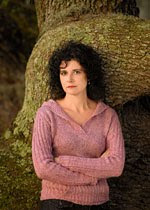
- Mary Anna Evans
- Mary Anna Evans has degrees in physics and engineering, but her heart is in the past. Her series character, Faye Longchamp, lives the exciting life of an archaeologist, and Mary Anna envies her a little. Faye Longchamp's growing list of adventures include Artifacts, Relics, Effigies, Findings, Floodgates and, coming in October, Strangers. Mary Anna is a co-founder and board member of the Anhinga Writers' Studio. The Studio presents an annual summer workshop in Gainesville, Florida, providing writing instruction and networking for fiction and nonfiction authors of all levels of experience. For information on this year's summer workshop, visit www.anhingawriters.org.


